
Personal Brand Landing Page: A Complete Guide to Building Your Digital Hub
Learn what a personal brand landing page is, why it matters, what to include, how to customize it, how to measure performance, and how to choose the right platform for creators, solopreneurs, and brands.
By Linklume
Personal Brand Landing Page: A Complete Guide to Building Your Digital Hub
Your audience may discover you on Instagram, binge your videos on TikTok, watch your tutorials on YouTube, read your posts on X/Twitter, and buy from you through a shop, newsletter, booking page, or digital product platform.
The problem? Most social media profiles give you limited space to connect all of that activity.
That is where a personal brand landing page becomes essential. Instead of forcing people to hunt across platforms, you give them one simple destination: a centralized, branded page that organizes your most important links, content, offers, and calls to action.
For creators, solopreneurs, brands, and individuals building an online presence, this page is more than a convenience. It is a strategic growth tool. It helps you guide attention, increase audience engagement, understand what people click, and make your digital presence feel more professional.
In this guide, we will break down what a personal brand landing page is, why it matters, what to include, how to customize it, how to measure performance, and how to choose the right platform for your goals.
What Is a Personal Brand Landing Page and Why Do You Need One?
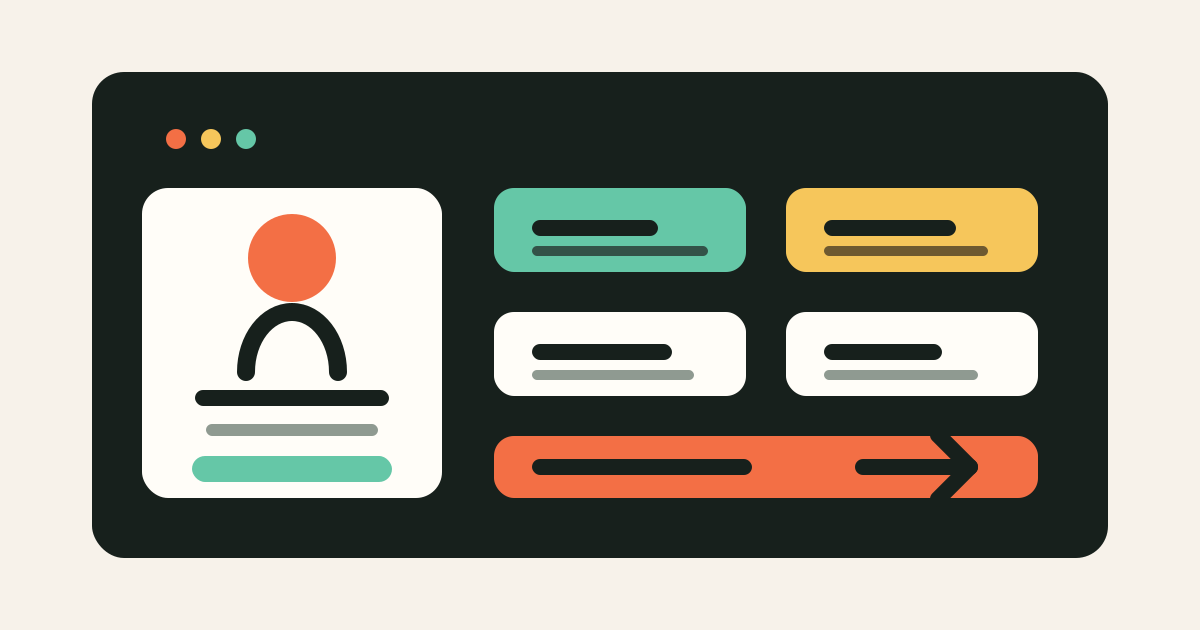
A personal brand landing page is a single web page that acts as the central hub for your online identity. It typically includes links to your social media profiles, featured content, products, services, videos, newsletter signup, contact information, and other important destinations.
In the creator economy, this is often called a link in bio page because it is commonly placed in the bio section of platforms like Instagram, TikTok, YouTube, and X/Twitter. As Later explains in its guide to what a link in bio is, the concept helps users overcome the limitation of having only one profile link by turning that single link into a gateway to many destinations.
But a strong personal brand landing page goes beyond simply listing links. It helps answer three important questions for your audience:
- Who are you?
- What do you offer?
- Where should they go next?
For example, a fitness creator might use a landing page to link to workout programs, YouTube videos, coaching applications, Instagram, TikTok, and a newsletter. A consultant might feature booking links, case studies, services, LinkedIn, podcast episodes, and a free resource. A musician might promote a new single, tour dates, merchandise, videos, and streaming profiles.
Without a central landing page, your audience may get fragmented across different platforms. Someone who finds you on TikTok may never discover your newsletter. Someone who watches your YouTube videos may not know you sell templates. Someone who follows you on Instagram may miss your upcoming event.
A personal brand landing page reduces that friction.
It gives your audience a clear next step and gives you more control over your digital presence.
Beyond the Bio: Unlocking Your Full Online Potential
The phrase "link in bio" can make this type of page sound small. In reality, it can become one of the most important assets in your personal brand ecosystem.
Social media platforms are powerful discovery channels, but they are not always built for deep navigation. Feeds move quickly. Algorithms change. Posts get buried. Bio sections are short. Your landing page gives you a more stable place to organize your work and direct attention intentionally.
Shopify's overview of why link in bio matters highlights a key point: these pages help turn social media attention into action. That action might be buying a product, joining a mailing list, reading an article, booking a service, or watching a video.
For creators and solopreneurs, this matters because attention alone does not build a sustainable brand. You need pathways.
A personal brand landing page can help you:
- Promote multiple offers at once
- Drive traffic to your best content
- Make your social media profiles work together
- Support product launches or campaigns
- Collect leads through newsletter or booking links
- Showcase your credibility
- Track what your audience actually cares about
Think of your landing page as the front desk of your online world. People may enter from different doors, but your landing page helps them find what they came for.
It also helps you stay flexible. If you launch a new product, publish a new video, open event registrations, release a podcast episode, or update your portfolio, you do not need to change every profile link separately. You update one page, and your audience always has access to the latest destination.
This is especially useful for creators and brands that post across multiple channels. Your Instagram audience may be interested in your visuals. Your YouTube audience may prefer tutorials. Your TikTok audience may respond to short-form content. A landing page lets you create one unified experience for all of them.
Crafting Your Digital Hub: Customization and Content Strategies
A good personal brand landing page is clear, useful, and aligned with your brand. It should not feel like a random list of links. It should feel like a curated experience.
Start with your primary goal
Before choosing colors or adding buttons, define the main action you want people to take.
Ask yourself:
- Do I want people to buy something?
- Book a call?
- Subscribe to my newsletter?
- Watch my latest video?
- Follow me on other platforms?
- Explore my services?
- Download a free resource?
Your answer should shape the structure of the page.
If you are launching a product, place that link near the top. If you are building an email list, make your signup prominent. If you are a creator trying to grow across platforms, highlight your strongest social media profiles and best content.
Avoid giving every link equal priority. When everything is equally important, nothing stands out.
Use your brand identity
Customization is one of the biggest advantages of a personal brand landing page. Your page should look and feel like you.
That includes:
- Colors that match your visual identity
- Fonts that reflect your personality
- Button styles that fit your aesthetic
- Layouts that guide visitors naturally
- Images or videos that reinforce your brand
- A short bio or headline that communicates your value
For example, a luxury wedding photographer may use elegant fonts, soft colors, image grids, and portfolio links. A tech educator may use clean layouts, bold buttons, embedded videos, and resource links. A wellness coach may use calming colors, testimonials, booking links, and newsletter signups.
Platforms like LinkLume are designed around this need for customization, allowing creators and brands to fine-tune themes, colors, fonts, layouts, and button styles while keeping setup simple.
Choose the right content blocks
Your personal brand landing page should include the content types that best support your goals.
Common content blocks include:
- Basic links: For websites, shops, booking pages, newsletters, and social profiles.
- Rich link blocks: For more visual calls to action with descriptions or thumbnails.
- Images: For portfolios, product previews, or personal branding.
- Grids: For showcasing multiple items cleanly.
- Carousels: For featured content, offers, or visual storytelling.
- Video embeds: For YouTube videos, trailers, tutorials, or introductions.
- Contact or booking links: For service providers and solopreneurs.
- QR codes: For events, packaging, business cards, and offline promotion.
The key is to match the content block to the visitor's intent. If someone wants to sample your expertise, a video embed may work well. If someone wants to shop, a product grid may be better. If someone wants to connect, social profile links and contact options should be easy to find.
Keep the page focused
A landing page can hold many links, but that does not mean it should hold every link.
Too many options can overwhelm visitors. A cleaner structure usually performs better because it helps people make decisions quickly.
A practical structure might look like this:
- Short headline or introduction
- Main call to action
- Featured content or offer
- Social media profiles
- Secondary links
- Contact, booking, or newsletter signup
You can always update the page as your priorities change. The best personal brand landing pages are not static. They evolve with your campaigns, content calendar, and audience behavior.
Measuring Success: Understanding Your Audience with Analytics
A personal brand landing page becomes much more powerful when it includes analytics.
Analytics help you understand what people do after they arrive. Instead of guessing which links matter, you can look at performance data such as:
- Page views
- Link clicks
- Click-through patterns
- Individual link performance
- Content engagement
- Changes over time
These metrics help creators and brands identify what content resonates most and refine their strategy.
For example, imagine you have five links on your landing page:
- "Book a consultation"
- "Watch my latest YouTube video"
- "Download my free guide"
- "Shop my templates"
- "Follow me on TikTok"
If the free guide gets the most clicks, it may be a strong lead magnet. If your YouTube link underperforms, you might test a clearer button label or move it higher. If your booking link gets views but few clicks, your offer may need stronger positioning.
Analytics turn your landing page into a feedback loop.
What to track regularly
You do not need to obsess over every metric every day. But it is useful to review performance on a consistent schedule.
Track:
- Total views: Are more people reaching your page?
- Total clicks: Are visitors taking action?
- Top-performing links: What does your audience care about most?
- Low-performing links: What may need to be removed, renamed, or repositioned?
- Campaign performance: Did a launch, post, or video drive traffic?
- Seasonal trends: Are certain offers stronger at certain times?
With real-time analytics, you can respond quickly. If you post a viral TikTok and see a spike in landing page views, you can update your top link to match that audience's likely interest. If you are running an event, you can monitor registration link clicks and adjust promotion accordingly.
Use data to improve content strategy
Analytics are not just for measuring your landing page. They can inform your broader content strategy.
If your audience consistently clicks your podcast link, create more podcast-related content. If your digital product link is popular, consider making more product-focused posts. If a social profile gets little engagement, decide whether it needs better placement or whether it is no longer a priority.
This is where a personal brand landing page becomes a growth tool rather than a static profile accessory.
Sprout Social's guide on why businesses need a link in bio tool emphasizes that link in bio tools can support both traffic direction and performance analysis. For creators, solopreneurs, and brands, that combination is valuable: you are not just sending people somewhere; you are learning from where they go.
Choosing the Right Platform for Your Personal Brand
There are many tools that help you build a personal brand landing page. Most offer the basics: link aggregation, profile customization, and analytics. Competitors in the space often differ in areas like design flexibility, content block variety, analytics depth, user experience, and pricing.
To choose the right platform, focus on what you actually need.
1. Ease of setup
You should be able to create and update your page quickly. If a tool is too complex, you may avoid maintaining it. Your landing page should support your workflow, not slow it down.
Look for:
- Fast setup
- Simple editing
- Mobile-friendly design
- Easy link management
- Clear preview options
This is especially important if you update links often for launches, videos, newsletters, or events.
2. Customization options
Your page should reflect your personal brand, not look like everyone else's.
Consider whether the platform lets you customize:
- Themes
- Colors
- Fonts
- Layouts
- Button styles
- Images
- Branding elements
Strong customization helps build trust. When visitors move from your Instagram, TikTok, or YouTube profile to your landing page, the experience should feel consistent.
3. Content block variety
A basic list of links may be enough when you are starting out. But as your brand grows, you may want more flexible content blocks.
Look for support for:
- Images
- Grids
- Carousels
- Video embeds
- Rich link blocks
- Product or service highlights
- QR and sharing tools
The more flexible the content blocks, the more your page can function like a true digital hub rather than a simple directory.
4. Analytics depth
At minimum, your platform should show views and clicks. Ideally, it should also show link-level performance so you can see which specific destinations are driving engagement.
This is especially useful if you are testing different offers, content formats, or campaigns.
For example, LinkLume includes real-time analytics with clicks, views, and link-level breakdowns, helping users understand what performs best and adjust their page accordingly.
5. Pricing that matches your stage
Many platforms offer pricing tiers, from free starter plans to paid plans with advanced features. The right choice depends on where you are in your growth journey.
A beginner may only need a free tier or starter plan to create a clean landing page and track basic performance. A growing brand may need multiple pages, advanced analytics, custom branding, or priority support.
Look for a platform that lets you start affordably and upgrade when your needs grow. That way, your landing page can scale with your brand.
Maximizing Your Reach: Advanced Tips for Your Landing Page
Once your personal brand landing page is live, the next step is optimization. Small improvements can have a meaningful impact on audience engagement.
Write clear button labels
Avoid vague labels like "Click here" or "My stuff." Be specific.
Better examples:
- "Download the free content planner"
- "Book a 30-minute strategy call"
- "Watch my latest YouTube tutorial"
- "Shop my digital templates"
- "Join my weekly newsletter"
Clear labels help visitors understand the value before they click.
Place your most important link first
Most visitors will not study every part of your page. Put your highest-priority call to action near the top.
If you are promoting a launch, make the launch link first. If your goal is lead generation, place your free resource or newsletter signup near the top. If you are growing your audience, feature your strongest platform or latest content.
Update your page with your content calendar
Your landing page should match what you are currently promoting.
If your latest TikTok mentions a free checklist, that checklist should be easy to find. If your Instagram Reel promotes a new product, the product link should be visible. If your YouTube video tells people to "check the link in bio," your landing page should make the next step obvious.
This alignment reduces friction and improves conversions.
Use QR codes for offline promotion
QR and share tools can extend your landing page beyond social media.
Use QR codes on:
- Business cards
- Event signage
- Product packaging
- Flyers
- Posters
- Presentation slides
- Pop-up shop materials
For creators and solopreneurs who network in person, QR codes make it easy for people to access your full digital presence instantly.
Test layout and link order
Do not assume your first version is your best version. Use analytics to test changes.
Try:
- Moving high-value links higher
- Renaming buttons
- Swapping visual blocks
- Removing low-performing links
- Featuring seasonal offers
- Testing video versus image content
Because landing pages are easy to update, you can improve them continuously without rebuilding your entire website.
Make it feel human
Your landing page should be useful, but it should also feel personal. Add a short bio, a friendly headline, or a clear statement of what you help people do.
For example:
- "Helping creators turn content into consistent income."
- "Simple fitness plans for busy professionals."
- "Brand strategy, templates, and tools for solo business owners."
- "New music, tour dates, and behind-the-scenes updates."
A strong personal brand landing page combines clarity with personality.
Conclusion: Build a Landing Page That Grows With You
A personal brand landing page is one of the simplest ways to make your online presence more organized, professional, and measurable.
Instead of sending your audience in different directions, you give them one clear hub where they can discover your content, offers, social media profiles, products, services, and next steps. With customization, content blocks, and analytics, your page becomes more than a list of links. It becomes a growth asset.
The best landing pages are focused, branded, easy to update, and guided by data. Start with your main goal, choose the right links, customize the experience, and review your analytics regularly. Over time, you will learn what your audience values most and how to guide them more effectively.
If you are ready to create a customizable link in bio page with rich content blocks and real-time analytics, you can explore LinkLume's personal brand landing page tools and start building a digital hub that grows with your brand.